

How Microsoft Wasted id Software

Microsoft is the king of wasted potential.
After acquiring ZeniMax Media for $7.5 billion in 2021, the company owned one of the most influential pioneers in gaming history: id Software.
The legendary studio behind Commander Keen, Wolfenstein 3D, DOOM and Quake was now one of the many studios under the Xbox Studios banner.
On paper, this should have been a perfect match. Microsoft gained one of gaming’s most respected developers, the creators of some of the industry’s most influential franchises and the ownership of id Tech, one of the most technically impressive game engines on the market.
Instead, five years later, Microsoft has laid off a massive portion of the studio, including key engine developers, leaving one of gaming's most legendary teams a shadow of its former self.
IMPORTANT: The Forge is the #1 source for everything that modern gaming is doing wrong, and the solutions studios must implement to turn the ship around.
If you want to dive deeper into how to predict whether a game will succeed or fail, and which game you should be building, consider becoming a paid subscriber.
You’ll get:
Market analysis on upcoming releases before the industry catches up.
Deep case studies on what makes players spend, stay and become your most powerful marketing force.
The audience no one is building for, and why they represent the most profitable opportunity in gaming right now.
Direct access to ask me questions directly and get my personal read on specific games or concepts.
A sneak peek into The Forge framework to build highly profitable games.
You could argue that id lost its touch, or that it couldn’t keep up with current development practices, but the brutal truth is that Microsoft never understood what made id Software valuable.
For decades, id Software thrived because it was focused. The studio built genre-defining shooters, pushed hardware further than anyone else, and created technology that often left competitors scrambling to catch up, including its own founders (remember Romero’s Daikatana?).
id Software was never designed to be a content factory.
The house of DOOM and Quake was a specialist.
One of the best specialists the industry had ever seen.
But instead of embracing that identity, Microsoft treated id like another studio in a growing portfolio of assets. Reports suggest the company constantly shifted expectations, leaving developers uncertain whether success would be measured through Game Pass engagement, subscriber growth, retail sales, technical achievements, or something else entirely.
We’ve seen this over and over again: when leadership cannot define success, even talented teams struggle to hit the target.
Medieval DOOM
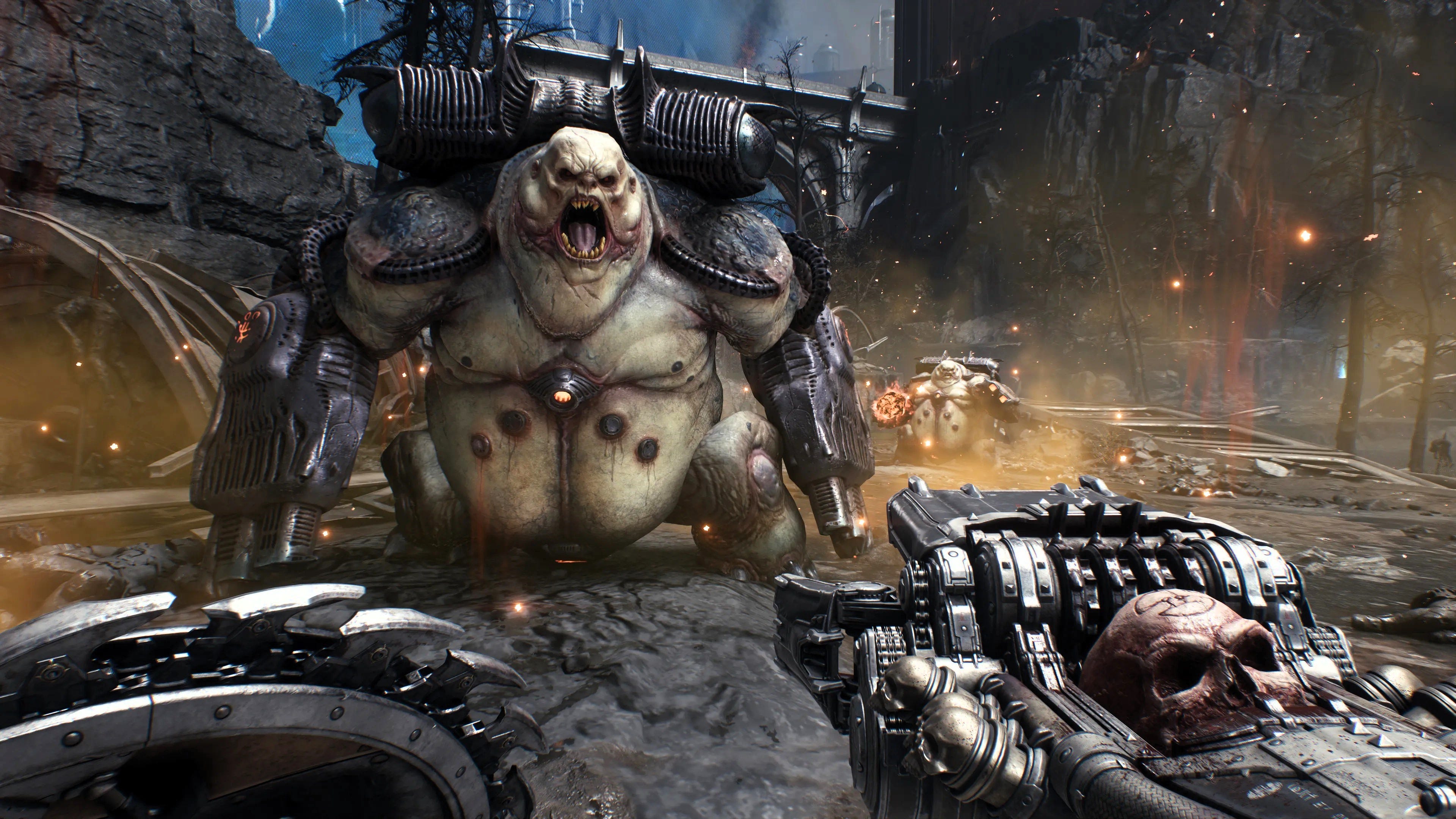
The only major game id Software released under Microsoft’s ownership was DOOM: The Dark Ages.
While the game is technically impressive and mechanically competent, it also illustrates a deeper creative problem that emerged inside the studio itself.
I’ve been playing games since 1988. I first played DOOM in 1994, only a year after its original release, and I’ve spent decades watching the franchise evolve through its highs, lows, reinventions, and comebacks.
You don’t need to agree with every creative decision id has made over the years, but after more than thirty years with the series, it’s not difficult to identify the elements that make DOOM tick.
What made DOOM legendary was its relentless focus. Every mechanic served the central fantasy of being an unstoppable force tearing through demons at blistering speed. Movement, combat, level design, enemy encounters, weapons, sound and pacing all reinforced the same core experience.
The Dark Ages, by contrast, feels pulled in multiple directions. Traditional first-person shooter combat competes with giant mech sequences and dragon flight segments, creating three distinct playstyles that fight for the player’s attention.
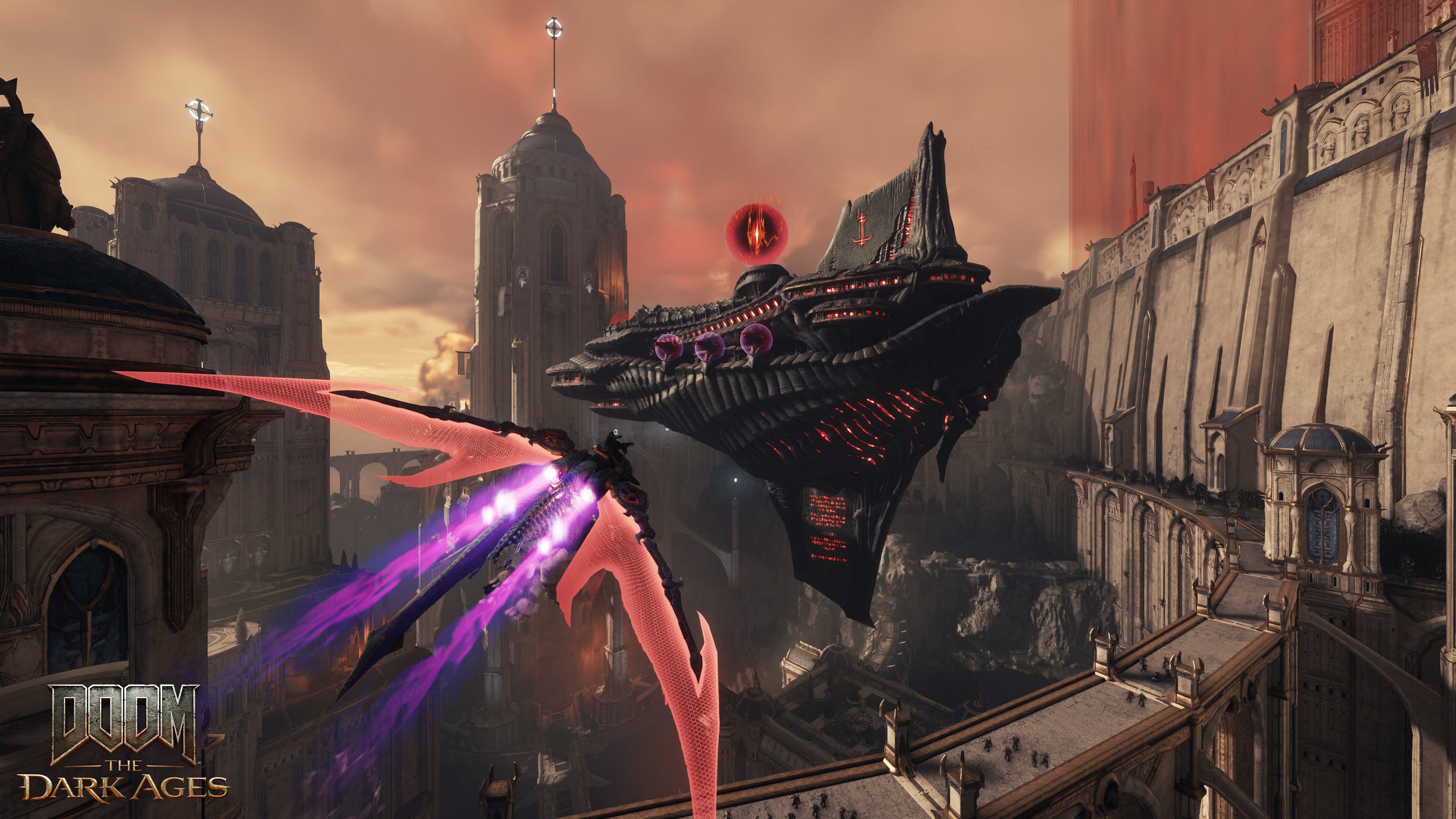
None of them are poorly executed, but together they dilute the purity that made DOOM stand apart from its competitors. The game remains good, but it often feels more interested in variety than mastery.
That doesn’t make The Dark Ages a bad game, but it’s not a DOOM game in spirit.
The problem wasn’t limited to DOOM: The Dark Ages. Reports suggest that before the layoffs, id Software was also dividing its attention across several projects that never made it to market, including a robot western, a new Perfect Dark, and a game reportedly inspired by John Wick.
None of those concepts sound inherently bad, but they are a clear sign that id Software, a studio once defined by relentless focus, had become distracted.
After all, this is the company that gave the world DOOM and Quake. The studio that helped define the first-person shooter genre. Yet during the years leading up to the layoffs, id appeared to be working on everything except the franchises that made it legendary.
The most glaring omission was Quake itself.
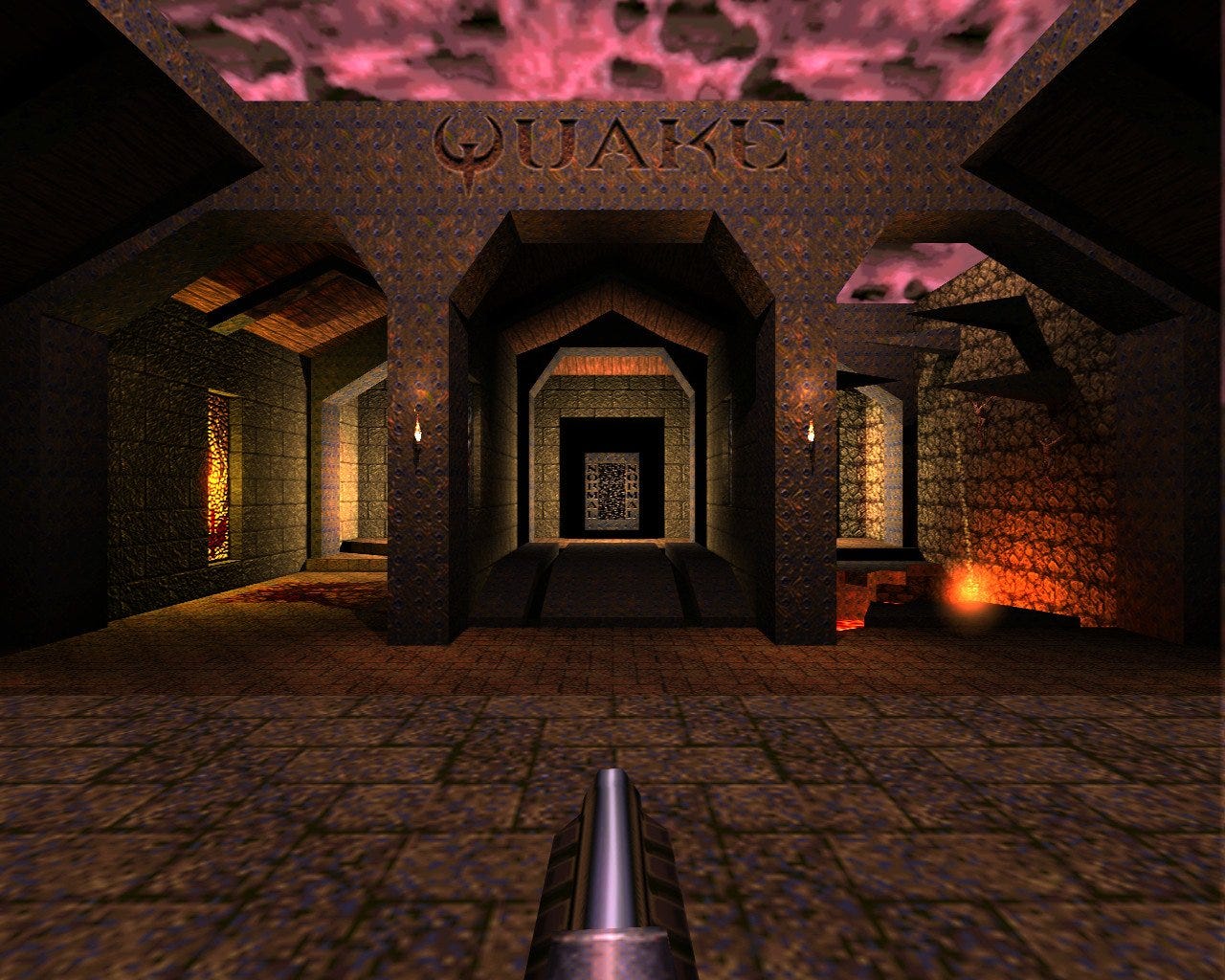
During a period when retro shooters were enjoying a renaissance and Quake was approaching its 30th anniversary, there was no major Quake project leading the studio’s roadmap.
That should concern anyone who cares about id Software’s future. Great studios become great by developing unique strengths and building upon them. They don’t become great by chasing every trending or exciting concept that lands on their desk.
The more id was pulled toward robot westerns, licensed-action concepts, and revivals of other franchises, the further it drifted from the identity that made it one of the most respected developers in gaming history.
A focused id Software should have been planning how to build the next DOOM, the next Quake, or the next breakthrough in first-person shooters. Instead, it found itself spread across projects that almost any competent AAA studio could have produced.
The creative misfire is on id Software. However, Microsoft’s failure was allowing it to happen while making even larger strategic mistakes of its own.
The Alternative To Unreal That Never Was
While id was building a single DOOM sequel, Microsoft was sitting on an opportunity that most publishers could only dream of.
The company owned one of the world’s most advanced game engines and had the resources to turn it into a legitimate competitor to Unreal Engine.
With Microsoft’s global reach, enterprise relationships, cloud infrastructure, developer ecosystem, and nearly unlimited capital, id Tech 8 could have become the foundation of an entirely new business strategy.

Instead, Unreal continued consolidating its dominance while id Tech remained largely confined to internal projects.
Imagine an alternative timeline where Microsoft aggressively licensed id Tech, invested heavily in tooling, documentation, developer support, and partnerships while positioning it as the performance-obsessed alternative to Unreal Engine 5.
Such a strategy would have generated revenue, expanded Microsoft’s influence across the industry, and strengthened the value of every studio under the Xbox umbrella.
Microsoft never pursued that opportunity.
That failure reveals the company’s larger problem. It saw id Software as a content producer rather than a strategic asset. Instead of wondering how to maximize the value of one of the industry’s most respected technical teams, it treated the studio like another cog in an increasingly bloated machine.
Now the consequences are impossible to ignore.
Microsoft still owns DOOM.
It still owns Quake.
It still owns id Tech.
What it no longer owns is the pioneering spark of a studio that became the standard for technical proficiency and unleashed creativity.
Microsoft acquired one of the greatest studios in gaming history.
Today, it is left with valuable intellectual property, an engine with untapped potential, and a studio hollowed out by layoffs.
The brands survived.
But brands and studios are nothing without a vision.
Back in the early 2000s, it seemed that every third game used the Quake 3 engine. It still puzzles me that id lost that dominant position so quickly and has been out of the engine game for so many years now. I wonder what happened. After all, id tech is clearly at least as good as Unreal and Unity.
Microsoft has become too big to run studios like id Software.
Too many 'business' graduates making poor decisions have led to many studios being shuttered simply because the behemoth corporation is incapable of letting the studios just do what they do best, be creative and make the games they want to play.